Hub Centric vs Non Hub Centric Wheel Fitting

Hub-Centric vs. Lug-Centric (Non-Hub-Centric) Wheels
Note on Braumach Spare Wheels: Braumach space-saver spare wheels are factory-made with a true hub-centric design. The center bore is precisely machined to match your vehicle's hub diameter, providing a direct fit without the need for any hub-centric rings or adapters. This ensures optimal load distribution on the hub (not the lugs) for better safety and reduced risk of vibrations or loosening.
When mounting wheels on a vehicle, the way the wheel is centered on the hub is critical for safety, balance, and ride quality. There are two main types: hub-centric and lug-centric (often called non-hub-centric).
Key Difference
- Hub-centric wheels: The wheel's center bore (the large hole in the middle of the wheel) exactly matches the diameter of the vehicle's hub (the protruding part on the axle). The hub centers the wheel precisely, and the vehicle's weight is primarily supported by this hub-to-bore fit. The lug nuts/studs mainly hold the wheel in place against lateral forces (e.g., during cornering).
- Lug-centric wheels: The center bore is larger than the hub, leaving a gap. The wheel is centered solely by the lug nuts/studs as they are tightened (often with conical or tapered seats that pull the wheel into position). All the vehicle's weight and forces are borne by the lugs.
Most factory (OEM) wheels are hub-centric for optimal performance. Many aftermarket wheels are lug-centric because a larger center bore allows them to fit a wider range of vehicles.
Visual Comparison: Hub-Centric vs. Lug-Centric Fitment
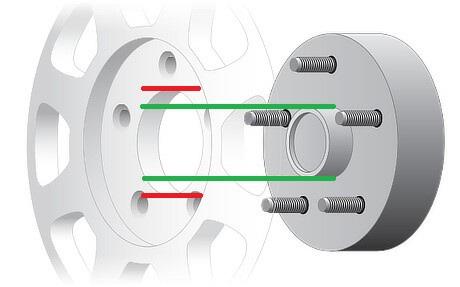
Side-by-side diagram showing snug hub-centric fit (left) vs. lug-centric with gap (right).
Source: Late Model Restoration
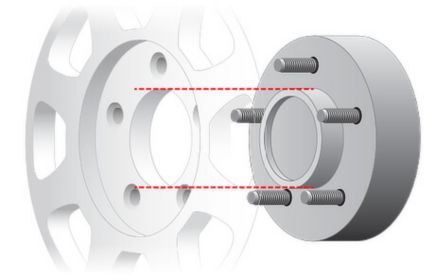
Hub-centric wheel perfectly centered on the vehicle hub.
Source: Discount Tire
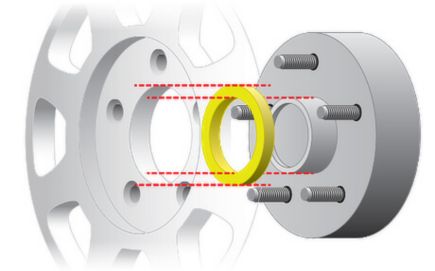
Lug-centric wheel adapted with a hub-centric ring to eliminate the gap.
Source: Discount Tire

Detailed comparison of load distribution in hub-centric vs. lug-centric wheels.
Source: KIPARDO Wheels

Visual explanation of how hub-centric rings work.
Source: Enthuze
Pros and Cons
| Aspect | Hub-Centric | Lug-Centric (Non-Hub-Centric) |
|---|---|---|
| Centering | Precise via hub; easier installation | Relies on lug tightening; can be less precise if not torqued properly |
| Vibration Risk | Low; smoother ride, especially at high speeds | Higher potential for vibrations if not perfectly centered |
| Load Distribution | Weight on hub; less stress on lugs/studs | Weight on lugs; more stress, potential for loosening or stud damage |
| Safety/Performance | Better for high-speed, track, or heavy use | Adequate for many daily uses but not ideal for performance |
| Common Use | OEM wheels; some premium aftermarket | Most aftermarket (for versatility) |
Hub-Centric Rings: The Solution for Lug-Centric Wheels
If you have aftermarket lug-centric wheels, you can make them effectively hub-centric by using hub-centric rings (also called centering rings). These are inexpensive plastic or metal rings that fit into the wheel's center bore and snugly around the vehicle's hub, filling the gap.
They reduce vibrations, improve balance, and shift load back to the hub. Always use the correct size (e.g., 73.1mm wheel bore to 57.1mm hub).
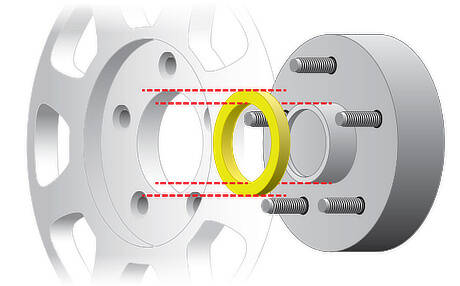
Step-by-step illustration of hub-centric ring installation.
Source: YouTube Tutorial

Before and after using hub-centric rings or spacers.
In summary, hub-centric is generally superior for stability and safety, but lug-centric works fine with proper installation—and hub-centric rings make it even better for aftermarket setups. Products like Braumach spare wheels offer a factory hub-centric fit right out of the box. If you're buying wheels, check the specs and consider rings if needed!